
THE EHP Framework
The EHP GeoNarrative Life Cycle Analysis (LCA) combines GIS-based spatial data, environmental performance metrics, and lived-experience narratives to identify underlying unmet community needs, systemic gaps and equities, and cumulative impacts. It facilitates research and drives effective data-informed decisions actions.
Community Narratives as Usable Data
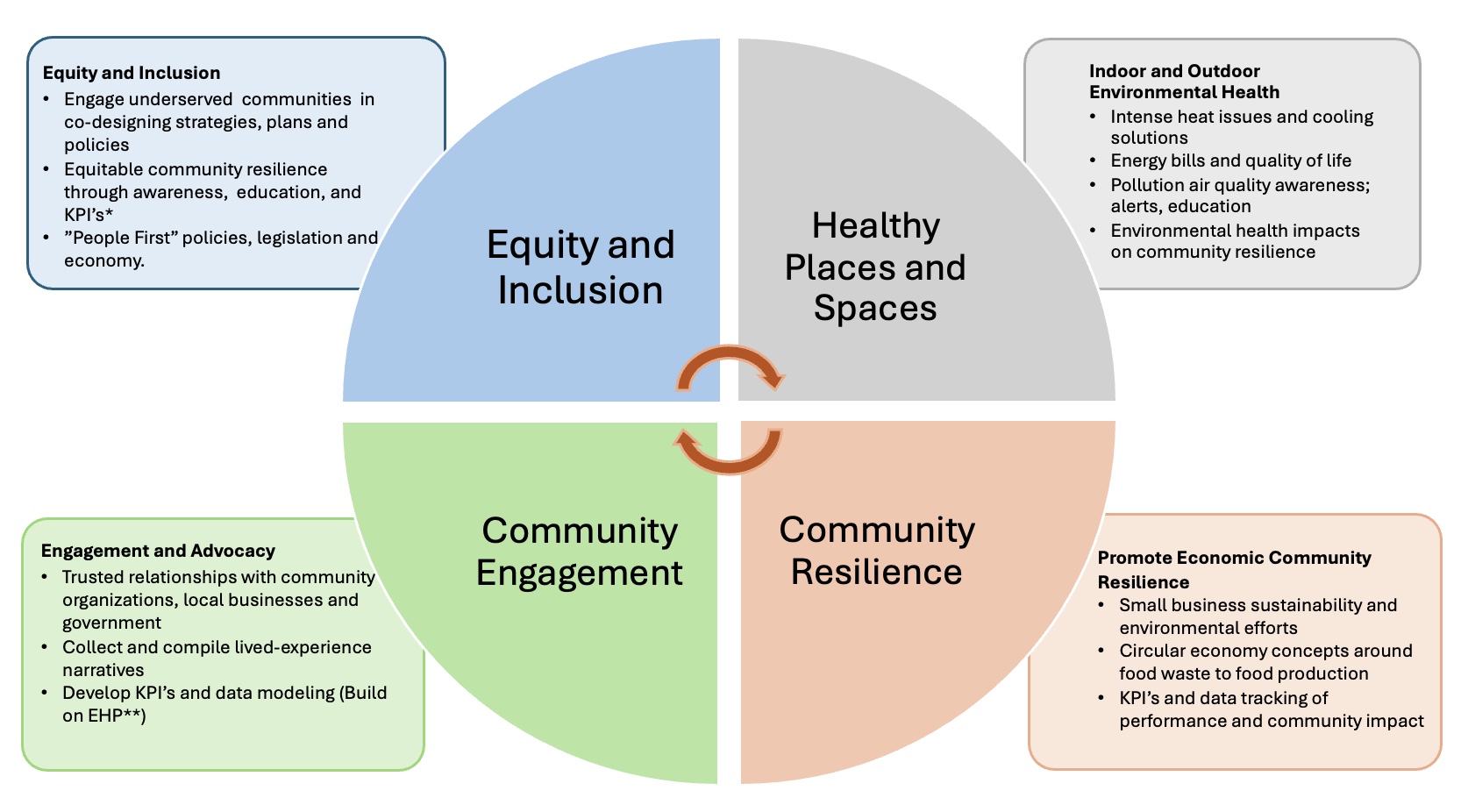
- The Lived Experience Model (VENN Diagram Below): The diagram illustrates a granular community engagement model that translates resident-identified priorities into a structured, systems-based framework. The purpose is to highlight the interdependence of four quality-of-life domains.
- Community Listening Insights: Insights gathered from community listening sessions are categorized in the four quadrants of the circle, while their corresponding boxes capture more detailed needs, policy considerations, and intervention opportunities associated with each domain.
- Demonstrates Interconnections: This model connects lived experience to specific strategies, enabling more targeted, equitable planning and decision-making.
Conceptual Modeling Considerations
- A systems-based interdependence approach. We call it “environmental holism” because it illustrates the interdependence of basic services, health, housing, and education as core drivers of community well-being. In planning and program development, these interdependencies can guide collabortions, program and development strategies, and service gaps remediations.
- Advocacy and Economic Impact: Conceptually, it provides the basis for integrated, equity-centered planning that aligns policy, investment, and design decisions to produce multiple co-benefits—such as improved health, housing and economic stability, basic services and access to resources.
Address
3965 E Cat Balue Drive
Phoenix, AZ
Open Hours
Monday – Friday: 9am – 2pm
Weekends: Closed
Holidays: Closed
Follow
